This blog contains affiliate links. If you make a purchase through these links, I may earn a small commission at no additional cost to you. This helps support and maintain the blog. Thank you for your support.
There is nothing more anxiety inducing to a first-time parent than flying on a crowded airplane with an infant. You might be wondering why, then, would myself and my husband choose to fly over 10 hours with our 4-month-old from New Jersey to Alaska. Simply put, family. I grew up in Anchorage, Alaska since I was 5 years old and it’s actually where I met my husband while he was stationed there in the military. After marrying in 2019, we moved to the East Coast to be closer to his family. Once I had my first-born in 2021, I knew our first trip would be to my home state of Alaska to visit my parents and siblings. I was so incredibly excited to introduce my family to our newest addition, but the trade-off was, of course, getting there.

Coming from the East Coast, specifically The Philadelphia Airport, there are no direct flights to Anchorage. All flights include at least one layover somewhere along the way. To minimize the amount of time we’d have to be in an airport or on a plane, we opted for the quickest route which required one layover. To ensure we didn’t have to rush from one flight to the next and to allow ourselves to stretch and get a bite to eat, we intentionally planned for this layover to last between 3-4 hours.
Now how do you ensure a smooth flight with a baby? The truth is, you can’t. All you can do is prepare as much as possible and approach it with a positive attitude. I’m here to tell you that as someone who tends to get anxious in public spaces, especially with my children, that if I can do it, I believe that you can too. Here are a few of my major tips to help ease some of that anxiety and mitigate any potential issues:
Choose the Right Flight

By the time our daughter was 4-months old, we knew her wake windows pretty well. We also knew that the longest stretch of time in which she’d be asleep would be at night. With that in mind, we booked our first leg of our trip as a red-eye flight so that she would be ready to sleep once we boarded the plane and took off. She woke twice, at most, during the entirety of that flight and went right back to sleep once I gave her milk. Having slept for almost the entirety of the flight, by the time we arrived at our layover destination, she was just waking up which made for the perfect opportunity to take a break in the airport. We used this layover time to stretch our legs, change her diaper, grab a quick bite, and stimulate her as much as possible before boarding again. Our next and last flight to our final destination took off right before her next nap and thankfully was a much shorter flight, so once again, the entire ride, she slept. I can’t stress how beneficial it can be to align your itinerary with your little one’s wake windows as best as you can. Obviously babies are fickle and unpredictable at times so there’s only so much you can do, but if you can, I would highly recommend booking your flight(s) around your baby’s sleep schedule.
Bring a Stroller
Some parents might disagree with me on this one, but I credit a lot of our ease of traveling throughout the airport to having our stroller on hand. Not only did this allow us to be handsfree throughout the airport since it enabled us to set our daughter down while also offering cargo for some of our carry-on items, but it was also incredibly easy to check at the gate. Most airlines do not consider car seats or strollers as standard checked baggage, allowing you to check these items for free, either initially at baggage check or right before your flight, at the gate/bridge. If a stroller is too large for you, or perhaps you don’t want to bring it along to your final destination, you could always opt for a baby carrier and stow it away in your carry-on.
Pre-board
You know when you’re waiting at your gate to board your flight and the attendant announces over the intercom that any passengers who may need additional time to get seated on the plane may board first? That includes you and your young children. Avoid standing on the plane and waiting in line as other passengers stow away their carry-on items by taking advantage of pre-boarding, especially if you have a stroller to check at the bridge. This allowed us to get settled on the plane straight away without any hassle or standing in the narrow aisle with our baby. I will say, though, you know your child best, so if you know they’re more likely to get restless and won’t like being seated for too long prior to takeoff, perhaps do the opposite, and board at the very end.
Bring Noise-Cancelling Head Phones

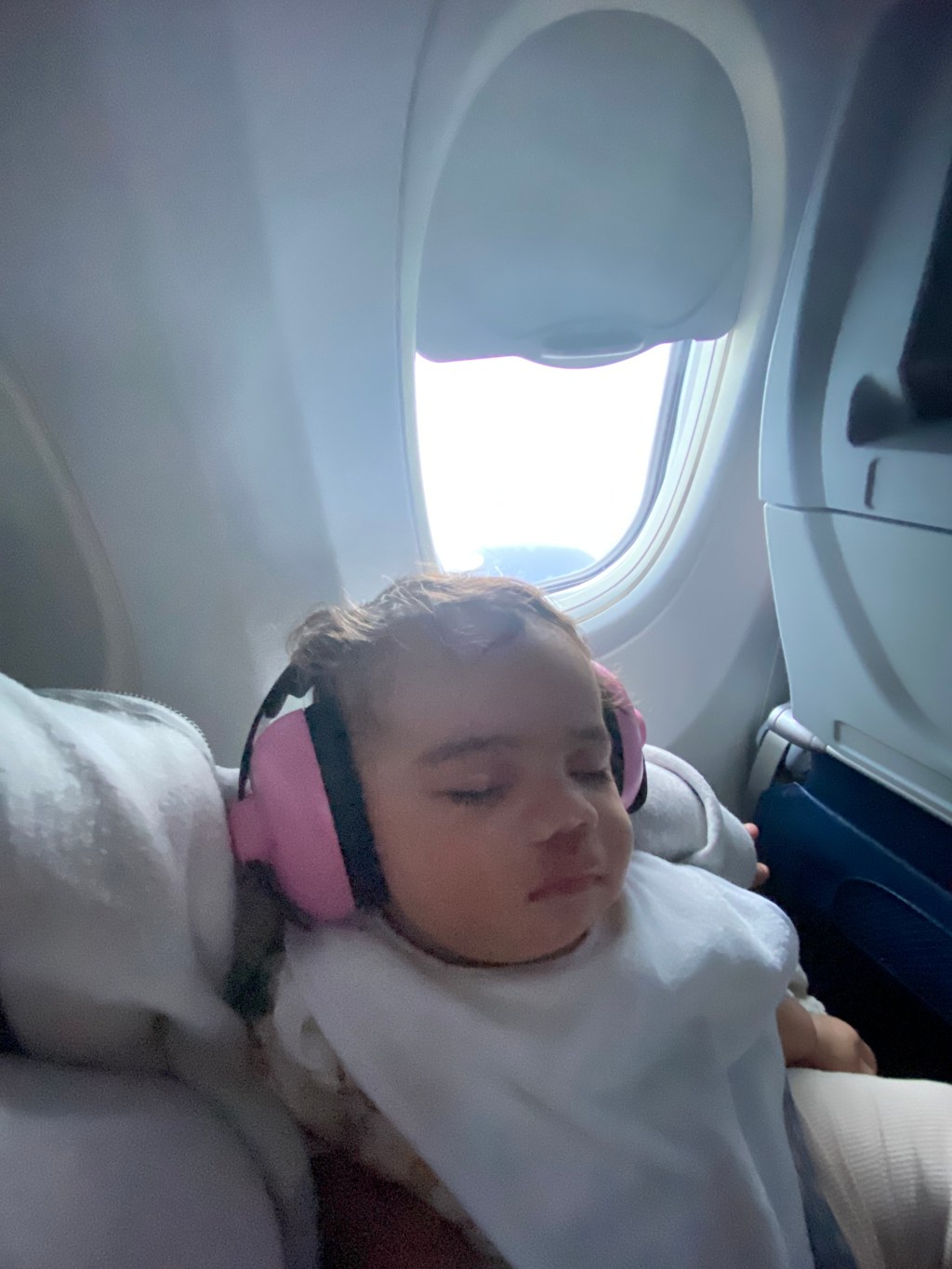
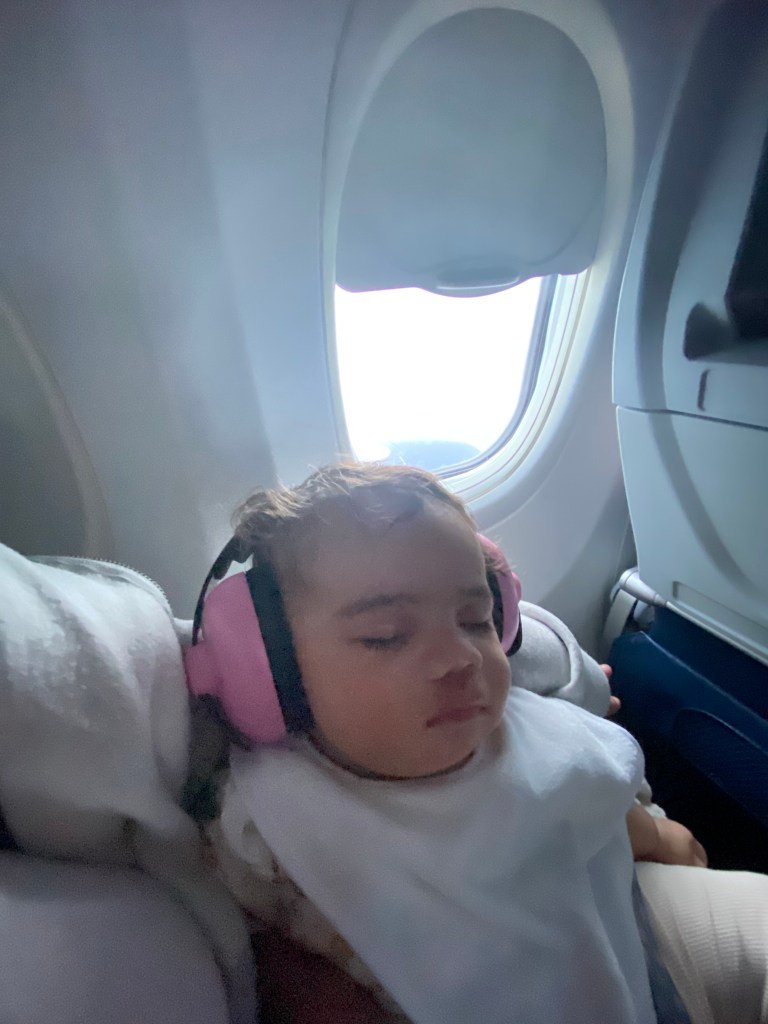
Planes can be very loud. From the amount of people enclosed in a confined space to the plane itself and it’s engines, you’ll want to protect your baby’s ears, particularly so if they’re an infant. There are a lot of abrupt noises that go off throughout the duration of your flight that are sure to startle your little one, including announcements by the pilot or flight attendants, chatter from other passengers, and the chimes from the seatbelt signs going on and off. Avoid interrupting your child’s sleep or scaring them from all of the unusual sounds by utilizing some noise-cancelling head phones. These are perfect for blocking out sound for any event that may have excessive noise and are even adjustable to fit snugly around your baby’s head.
Use Disposable Bottle Liners

If your baby is formula fed, like mine, you’ll definitely want to invest in some disposable bottle liners, especially if you’ll be on any long flights. Prior to planning our trip, I had planned to just pack as many bottles as possible, and at one point, even considered bringing a bottle brush along. In hindsight, this was so unrealistic and excessive, not to mention gross – because where exactly did I think I’d be washing these bottles? After some research, I learned about these disposable bottle liners. You’ll still need to wash and sanitize the bottle’s nipples, but it definitely helps minimize the amount of feeding materials you’ll need to pack.
Feed During Take Off and Landing
A common discomfort for most flyers, including infants, are their ears popping as the altitude changes. To prevent this from happening to your little one, try to feed them as the plane not only takes off, but also when it lands. This typically will relieve ear pressure and prevent their little ears from popping during the ascent and descent.
Bring Pacifier Clips
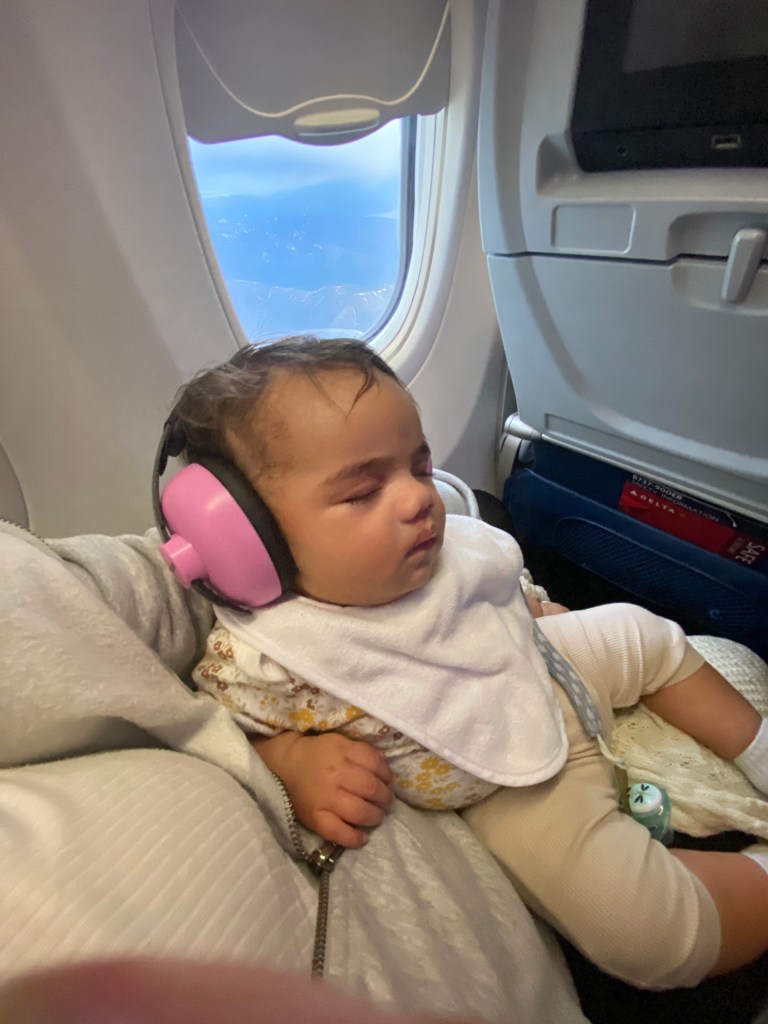
It’s no secret that airplanes and airports are some of the most bacteria-ridden places. The last thing you want is to have your saving grace (your baby’s binky) fall on the filthy airplane floor with no way to sanitize it and a long flight ahead of you. Pack a pacifier clip or two to avoid this, and perhaps even a pacifier case to be extra safe.
These were the key essentials for us when traveling with our baby. Although we personally had a positive experience flying with our baby girl, I know that it can be incredibly stressful flying with kids, let alone infants. Try to give yourself and your baby grace along your journey. Don’t worry about what other people might be thinking. Be there for your child in whatever capacity they need as this can be very overwhelming for them as well.
I hope that these small tips and tricks can help you have the smoothest flight possible and excited for all of your family’s future adventures together! All of the items we used and were mentioned can be found on my Amazon storefront for easy access. Let me know in the comments what the longest flight with children you’ve ever flown is and any tips you might have for fellow parents embarking on their first journey together.



 Life, as of Late
Leave a comment